What Happened? A Quick Overview of the Pakistan’s Radiation Leak
Time period of event( Pakistan’s Radiation Leak)
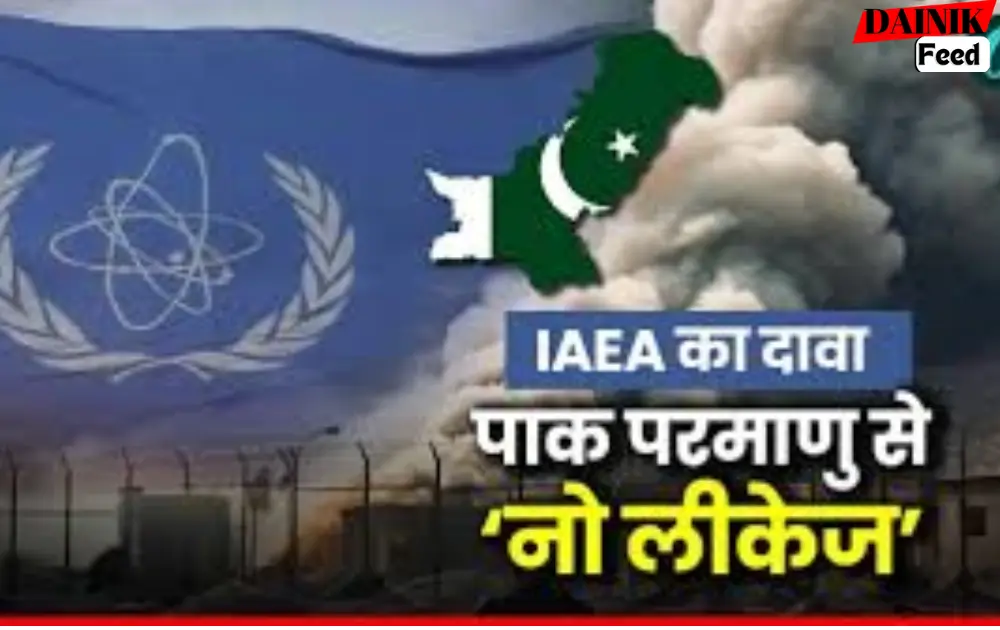
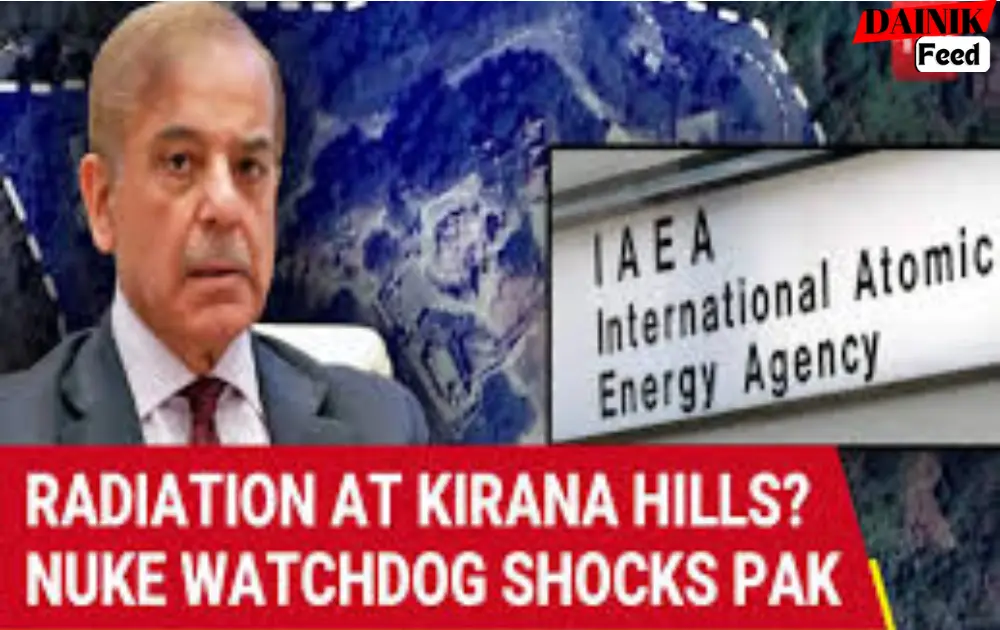
Pakistan’s Radiation Leak,In early May 2025, rumors of a nuclear radiation leakage in the Kiran hills of Pakistan in Sargodha district began to broadcast widely. These reports accelerated India’s military operations, codenum operations after vermilion, which targeted Pakistani terrorist sites and aerial status. There was speculation that the Indian missile strike affected the facility of Kiran Hills, believing that the underground nuclear reserves of Pakistan are believed to be.
When supervisors mentioned the presence of an American nuclear emergency aircraft in the surrounding area, the situation increased, more concerns of a possible radioactive incident. Despite these developments, both the Indian Air Force and the International Atomic Energy Agency (IAEA) clearly denied any radiation leak or release of Pakistan’s nuclear facilities. The objective of IAEA’s statement is to remove misinformation and assure the international community about the security of Pakistan’s nuclear installations.
Immediate local impact( Pakistan’s Radiation Leak)
Unconfirmed reports of a radiation leakage caused widespread public concern, especially in areas close to the alleged incident site. Residents of neighboring areas expressed apprehension about potential health risks, environmental contamination and safety of water sources. Social media platforms raised these concerns, using uncomfortable information and individual accounts of health anomalies. Local authorities responded by monitoring the safety assessment and radiation level in the surrounding area. Initial findings did not align with the assurance of IAEA, no unusual radiation reading indicated. Nevertheless, this phenomenon outlined the need for transparent communication and strong emergency preparations to effectively address public concerns.
While immediate threat was considered non-existing, the episode highlighted the need for clear, timely information to maintain stringent safety protocols on nuclear features and prevent nervousness and misinformation.
Why the world is watching – global concern over nuclear security( Pakistan’s Radiation Leak)
Environmental risk beyond borders( Pakistan’s Radiation Leak)
Nuclear events are never local – they carry environmental risks that cross national borders. In the case of rumor radiation leakage in Pakistan, global attention quickly turned to a possible decline, both literal and metaphor. Once released radiation can travel through air and water, affecting neighboring countries and even thousands of kilometers away. If a significant leakage of the country-Pakistan-Pakistan-Pakistans like India, Afghanistan, Iran and China is confirmed if a significant leakage is confirmed.
These risks include radioactive contamination of soil and water supply, harmful risk to radiation and long -term damage to agriculture and ecosystems. Even detecting the amount of radiation can disrupt livelihood, especially in rural areas dependent on farming and fishing. In addition, concerns are not limited to the environment alone. A nuclear safety violation can affect regional diplomacy, economic stability and public trust. Global organizations such as the International Atomic Energy Agency (IAEA) closely monitor such developments, as the breakdown in nuclear security is seen everywhere as a threat everywhere. The possibility of environmental disaster is that the world is looking at Pakistan’s situation so closely – even in the absence of confirmed leaks.
Historical reference to nuclear events( Pakistan’s Radiation Leak)
History provides many powerful reminders how disastrous nuclear accidents can occur. The Chernobyl disaster in 1986 is probably the most infamous example, causing large -scale radioactive contamination in Europe and deaths thousands of time. The 2011 Fukushima disaster in Japan – surrounded by an earthquake and tsunami – forced the evacuation of more than 150,000 inhabitants and created a global debate on nuclear power security. Even small incidents, such as the three Mile Islands accident in the United States of 1979, show how quickly the public confidence can eradicate, and how governments are pressurized to implement strict rules.
These historical events act as an important benchmark, which highlight the need for active safety measures and international cooperation – especially when nuclear features are located in politically sensitive or densely populated areas such as South Asia.
Top 10 global reactions for radiation leakage( Pakistan’s Radiation Leak)
Rumors of rumors in Pakistan have provoked a wave of global attention and international reactions. While no official confirmation of leakage has been verified, governments and organizations worldwide have reacted rapidly and seriously, highlighting the shared responsibility in the management of nuclear security.
1. United Nations urges transparency and support The United Nations called Pakistan to maintain transparency and open communication channels with international partners. He emphasized the importance of collective efforts to assess and manage any possible risk for public health and environment. Pakistan’s Radiation Leak
2 for international surveillance 2. U.S. The United States advocated real -time international monitoring of the suspected site. US officials emphasized the importance of independent verification to ensure regional stability and maintain public beliefs.
3. China provides technical support to include leakage As a close strategic partner, China offered technical and logical assistance to Pakistan. This included radiation detection equipment and nuclear safety experts to help assess the condition on the ground. Pakistan’s Radiation Leak
4. Russia has warned against wrong information in search of facts Russia warned against the spread of misinformation and urged the dependence of recognized officials like IAEA on data. He emphasized the geopolitical risks of false narratives in nuclear matters.
5. India issues security advisor, shows regional concern India issued advice to its border states, focusing on emergency preparations and radiation monitoring. Indian officials also expressed concern over nuclear security in the subcontinent.
6. European Union pushes for environmental accountability The European Union highlighted the environmental implications of the incident and pushed it to a strong global nuclear rule. He called all the nuclear-capable nations for updated security audit. Pakistan’s Radiation Leak
7. Japan shares lessons with Fukushima Drawing from his Fukushima experience, Japan gave strategic advice on radiation control, withdrawal plan and prolonged cleaning efforts.
8. Which emphasizes health risk evaluation and assistance The World Health Organization emphasized the need for medical preparation and offered to send health experts to evaluate the risk in the affected areas.
9. IAEA proposes an independent inspection team IAEA proposed to deploy a neutral inspection team to verify safety standards and provide technical guidance, strengthening its commitment to nuclear transparency. 10. Global NGOs gather for transparency and relief Many global NGOs launched campaigns to demand more transparency and provide relief materials including protective gear and medical kits to nearby communities.
10. Global NGOs gather for transparency and relief Many global NGOs launched campaigns to demand more transparency and provide relief materials including protective gear and medical kits to nearby communities.
Pakistan’s official response – management of crisis Statements from government officials( Pakistan’s Radiation Leak)
In response to the increasing speculation over the alleged radiation leakage, the Pakistan government rapidly issued public statements, denying any such incident in its nuclear facilities. Pakistan Atomic Energy Commission (PAEC) officials labeled claims as “baseless and misleading”, stating that all nuclear property is safe and operated under strict security protocols. The Foreign Office reiterated that Pakistan follows internationally recognized nuclear security standards and has complete compliance with the International Atomic Energy Agency (IAEA) guidelines. The purpose of these official statements was to calm public anxiety and combat the wrong information of spreading through media and social platforms.
Measures to control the situation( Pakistan’s Radiation Leak)
To strengthen its position, the government introduced precautionary measures, including comprehensive security audit of major nuclear sites. Environmental monitoring teams were deployed to assess radiation levels in the surrounding areas, and initial reports did not indicate no unusual readings. In coordination with local authorities, health departments were instructed to be vigilant, and emergency response teams were placed on standby. The government also opened the lines of communication with international bodies like IAEA to offer transparency and cooperation. These tasks were not only done to manage the domestic response, but also to assure the global community of Pakistan’s commitment to nuclear rule and crisis management. Pakistan’s Radiation Leak
Global solidarity in action – an expected approach
Humanitarian support and expert support( Pakistan’s Radiation Leak)
In view of the concerns of radiation leakage, global solidarity has emerged as a powerful force. Many countries and international organizations offered humanitarian aid and technical assistance to Pakistan, even official sources reduced the seriousness of the situation. Health-centered organizations such as the World Health Organization (WHO) promised to send the medical teams to create risk assessments and to prepare local health care systems for emergency related to any radiation.
Countries such as China, Japan and Germany, sharing their experience in handling nuclear safety and crisis management, increased the proposals of expert consultation. Non -governmental organizations also gathered potentially affected communities to provide protective equipment, water purification equipment and public awareness materials. This support of support reflects a shared commitment to human welfare on political boundaries.
Future steps for nuclear safety ( Pakistan’s Radiation Leak)
cooperation This incident has ruled the call for more integrated and transparent global approach for nuclear safety. Experts and diplomats are urged for the formation of a regional nuclear security task force, especially in South Asia, where many countries have nuclear capabilities. The requirement of shared initial warning systems, joint training programs and international inspection protocols to prevent future crises is increasing. The International Atomic Energy Agency (IAEA) has also enhanced technical cooperation and data-sharing agreements. These stages, if action is taken, can mark a significant turn in global nuclear rule – promoting the culture of cooperation, transparency and preparations that overcome boundaries and political differences.
Conclusions: converting crisis into cooperation (Pakistan’s Radiation Leak)
Lesson for global community (Pakistan’s Radiation Leak)
The alleged radiation leakage in Pakistan, whether verified or not, serves as an important reminder to the global community: nuclear security is a common responsibility. The incident showed how quickly the local concerns may grow in international fear, especially in the current geo -political stress area. A major lesson is the importance of timely and transparent communication. Incorrect information and speculation can often cause more damage as an event. Another lesson requires emergency preparations – not only within one country, but beyond the boundaries. The reactions of global agencies and governments highlight the importance of international solidarity, early identification systems and public awareness in managing potential nuclear risks Pakistan’s Radiation Leak.
READ MORE:IPL SUSPENSION
Way forward in nuclear safety( Pakistan’s Radiation Leak)
Moving forward, the global community must work together to strengthen the nuclear security structure. This includes strengthening the role of the International Atomic Energy Agency (IAEA), implementing joint inspection programs and promoting knowledge-sharing between nuclear-capable nations. Regional cooperation in South Asia, especially, must be preferred through multilateral dialogue and confidence-making initiatives. Advanced monitoring technology, emergency training and investment in public education can significantly reduce future risks. Ultimately, this event – real or rumor – must work as a catalyst for meaningful cooperation, reminds the world that when it comes to nuclear security, unity and preparations, these are our strongest security measures.